What shipped

Everything here draws real pixels

No mockups, no promised features wearing the present tense. If it is on this page, it renders today, a test fails when it breaks, and a devlog post tells the story straight.

Molten gold flowing across dark brushed metal with iridescent edges
01

OpenPBR, the whole stack

Materials that behave like matter

Metal that looks like metal, glass that refracts what actually stands behind it, lacquer over paint, velvet that catches the rim light. The full OpenPBR layered BSDF runs live, and a white-furnace test proves no photon is invented or lost.

  • Layered BSDF stack with Mix, Add, Over and Coat operators
  • Sorted see-through glass with Fresnel rims
  • Anisotropy, sheen, iridescence, clearcoat, subsurface, transmission
  • Marschner hair and fur fibers
  • Kulla-Conty multi-scatter compensation, furnace-verified
Energy-correct under every light
Golden volumetric light beams crossing through haze
02

Clustered Forward+

A thousand lights, one frame

The light store holds 1,024 slots and bins them per tile, so a club rig is a patch, not a plan. Area lights have actual shapes, IES profiles read real photometry, and every shadow is budgeted so the frame never blows.

  • Rect, disk, sphere and tube area lights via LTC
  • IES photometric profiles
  • Cube and cone shadows for point and spot lights, on a per-frame budget
  • 4-cascade PCSS sun shadows that soften with occluder distance
1,000 lights in 4 ms on an RTX 5070
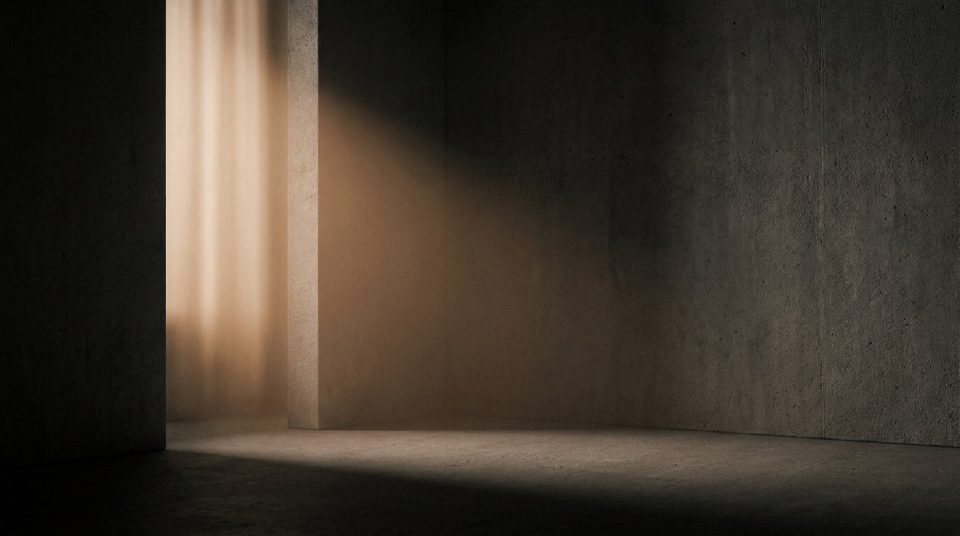
Soft golden light bouncing into a dark concrete corner
03

Hybrid global illumination

Light that bounces

Put a white sphere beside a red wall and the sphere blushes. First-bounce color bleed runs live, with a hybrid orchestrator underneath: ReSTIR direct and indirect, DDGI probes, SDF tracing and a radiance cache, each picked where it earns its keep.

  • ReSTIR direct and indirect lighting
  • DDGI probe grids and surface probes
  • SDF trace and radiance cache
  • Hardware ray_query where the GPU offers it
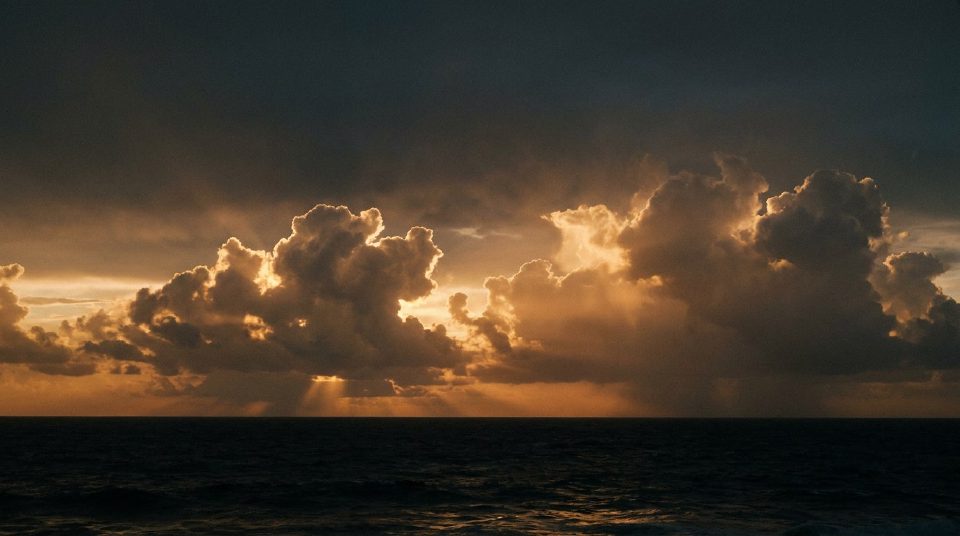
Golden sunset cumulus towering over a dark ocean horizon
04

Sky, fog, clouds, ocean

Weather you can dial

A physically based sky whose sun reddens at the horizon, fog that knows where your geometry is, traced cumulus with shadowed bases, and a Tessendorf FFT ocean. Wind 1 is a pond. Wind 18 is a storm.

  • Hillaire atmosphere with a sun-elevation pin
  • Froxel volumetric fog that composites with distance
  • Temporally accumulated volumetric clouds, masked behind geometry
  • FFT ocean: JONSWAP spectrum, four cascades, whitecap foam
  • Refractive water, per-metre absorption, caustics on the sea floor
05

ACES 2.0 and friends

Color, managed

The default look is the industry default: a real ACES 2.0 transform matched against the film reference, not a curve that squints like one. HDR is native end to end, and when you want a different look, the tonemap menu runs deep.

  • ACES 2.0 DRT, AgX Punchy and Golden, Tony McMapface, Khronos-Neutral, Reinhard-Jodie
  • HDR10 PQ, HLG and scRGB display encodes
  • Rgba16Float intermediates everywhere, no 8-bit linear anywhere
  • Color grading through real .cube 3D LUTs
06

glTF 2.0, fully dressed

Bring your model library

Drop in a glTF and it arrives wearing everything its author gave it: textures in the right color spaces, the whole material extension set, and its animations. Characters play their authored walks, GPU-skinned.

  • Clearcoat, sheen, transmission, anisotropy, volume, ior and emissive strength import as authored
  • KHR_texture_transform and a second UV set
  • Per-texture wrap and filter modes
  • Keyframed clip player with time, speed and loop pins
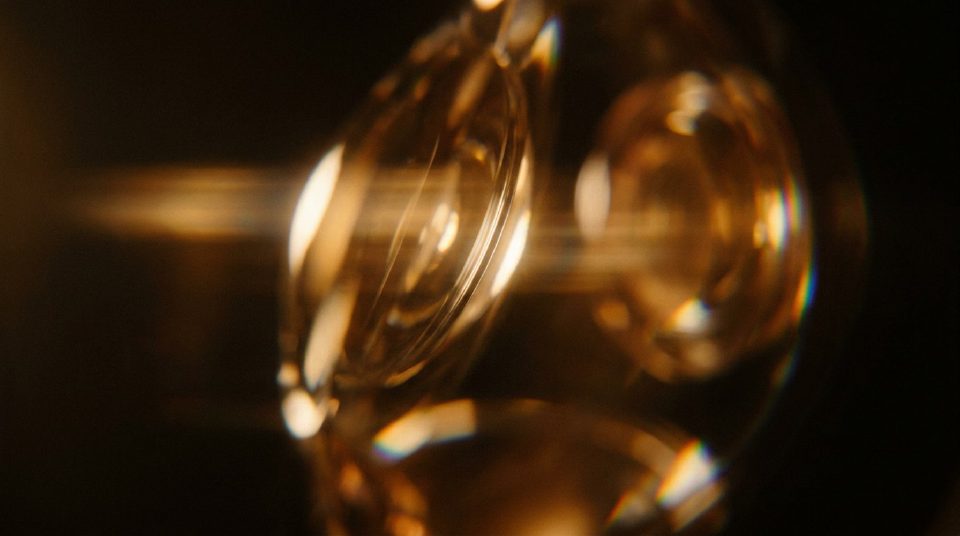
Golden light refracting through stacked lens elements
07

Post-FX stack

A finishing pass with restraint

Jimenez bloom that blooms on time, SSAO, depth of field, TAA on by default, film grain and CAS sharpening. Plus a resolution dial: render the 3D pass at 50 to 75 percent and reconstruct full size with a temporal upscaler nobody in the audience will catch.

  • Progressive bloom, SSAO, depth of field, film grain, CAS
  • Motion-vector TAA with Kaplanyan specular AA
  • Temporal upscaler behind a single resolution dial
  • Around 50 texture filter and analysis nodes: denoise, FFT2D, optical flow, SSIM, PSNR
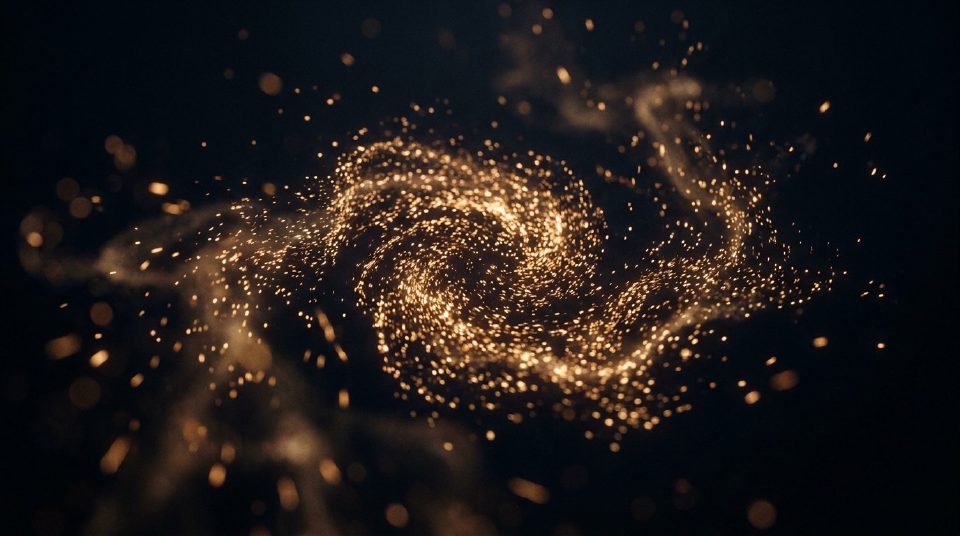
Thousands of golden embers swirling in a vortex
08

2D today, GPU millions next

Particles, honestly

A CPU 2D particle system with emitters, forces and a draw cap that thins the spray instead of blanking the frame when you ask for too much. The GPU compute version with affectors and trails is the roadmap's first bet, and we would rather ship it right than ship it twice.

  • Emitter2D and RenderParticles2D
  • A graceful 100k draw cap that degrades visibly, never silently
09

WGSL, SDFs, Shadertoy

Shaders when you want them

Patch with nodes until you want raw WGSL, then write a PixelShader or ComputeShader inline. Paste a Shadertoy with Ctrl+Shift+V and it lands as a node. SDF shapes raymarch without you writing the raymarcher.

  • Custom WGSL pixel and compute shader nodes with real buffers
  • Shadertoy paste, uniforms mapped for you
  • 15 SDF-2D nodes: 12 primitives, 4 combines
  • vello-backed 2D: 9 shapes, procedural ramps, FBM noise
A constellation of glowing gold nodes joined by threads of light
10

The instrument

An editor that keeps up

Space opens the node browser, Tab searches everything, wires snap to the pin you meant. Over 230 nodes ship documented, tooltips carry ranges and defaults, and when a node cannot draw it wears a red dot instead of pretending. The profiler is one keypress away.

  • Fuzzy search across nodes, pins and docs
  • Magnet-snap wires with type-filtered auto-connect
  • Subpatches, undo and redo, copy and paste
  • F8 frame-budget profiler HUD
  • Red error dots on nodes that cannot draw; honesty is a feature
230+ nodes, all documented, enforced by CI
Rows of golden concert beams fanning through smoke over an empty stage
11

Performance hardening

Built for the stage

Multi-window HDR output with an encode queue, projection mapping with corner-pin, mesh warp and edge blend, and a crash sandbox so one bad node does not take the show down. Hitches get captured, not shrugged at.

  • Multi-window HDR live output
  • Corner-pin, Bezier mesh warp and edge blend
  • PerfGuard crash sandbox and hitch capture
  • An on-air lamp so you always know which sink is the show
12

Files out, automation in

Leave with the pixels

PNG and image-sequence export, a .lux project format with autosave, a headless mode that renders without a display, and an embedded MCP server so an AI can patch alongside you. The CLI even has manners.

  • PNG and JPEG export, image sequences, letterbox presets
  • Headless readback that holds up on real GPUs
  • --dump-frame, --dump-docs and a --help worth reading
  • Embedded MCP server: lux --mcp